Saturday, February 5, 2011
Sony Ericsson Neo breaks cover again, first hands-on appears
at
8:33 AM
Sony Ericsson hasn't even announced the Neo, but that didn't stop the good folks at Techradar from getting their hands on a unit. Formerly known by the name Hallon, the SE Neo is the Android version of the Symbian powered Vivaz's unique form factor. Ask anyone with a smartphone fetish and they'll probably agree that Sony Ericsson brings beautiful and very well designed hardware to the table. The curved back and center mounted rear camera (8.1 MP) on the Neo are great examples of this. The truth comes when you turn them on, though. Techradar says that Timescape running on Gingerbread has been improved, but we'll have to withhold judgment until we get our hands on one. In the meantime, head over to the source link and have a look. You know you're as curious as we are. [Techradar]
Source: Androidcentral.com
Honeycomb on Nook Color rooted
at
8:32 AM
With wild (and unconfirmed) rumors swirling about the future of rooting on the Nook Color, those who already have one of the modded Android tablets just got some good news: the port of the Honeycomb preview that's running on the Nook Color can now be rooted.
Dev NuroSlam posted a method of installing the necessary su and busybox files, which will grant apps like Root Explorer, Titanium Backup, and SetCPU root access. It still isn't working in conjunction with SuperUser app (which asks your permission for root), so you're missing that extra layer of precaution. But if you're handy with a command line, check out our how-to root Nook Color Honeycomb thread and enjoy your rooted Honeycomb! [xda-developers]
Source: Androidcentral.com
External battery review: 3GJuice Android Lunchbox (We've got 12 to give away!)
at
8:31 AM
We travel quite a bit, which means we're always looking for ways to keep our phones charged while on the go. And the folks at 3GJuice sent us a fun little charger to try out. It's called the Android Lunchbox, and it's a nifty little 1000mAh battery that can keep you going in a pinch.
First off, it's a tiny little thing, about 1.5-inches square, 5/8 of an inch thick, and weighs 1.5 ounces. So you can slip it in your pocket and not get goofy looks. The front of the battery has a mirror finish. When you're charging the Lunchbox, little red arrows tell you its progress, and they turn blue when it's all juiced up.
Then there's the shining feature. While most external batteries need to be charged using the old miniUSB plugs (not many phones use them anymore, so it's one more cable to carry), the Android Lunchbox charges with miniUSB and microUSB. Nice.
But wait, there's more. tucked inside a little rubber flap on the back are miniUSB and microUSB plugs for charging your devices. Handy, indeed, though don't try to charge two devices at once. And you'll need to remember that this only a 1000mAh battery -- most phones now have a 1500mAh battery (or thereabouts), so you're not going to get back to 100 percent from dead. But it's great for keeping topped off, or in an emergency. You can buy a 3GJuice Amazon Lunchbox on Amazon for $30.
We've got more pics of it in action after the break. And as a special treat, we've got a dozen of the Lunchboxes to give away! Head into the Android Central Forums to enter!
Source: Androidcentral.com
HTC Merge (yeah, really) passes the FCC, still headed to Alltel?
at
8:29 AM
Hey, look at that. The HTC Merge -- which has been mostly MIA since we got our hands on it last fall -- has made it through the FCC as PG32100, which lends credence to the rumor that it might find a bit of life on Alltel. That's not quite the same as being released on Verizon. But it beats being killed off before ever touching consumer hands. [FCC via PocketNow]
Source: Androidcentral.com
HTC Desire 2 Appears in Vodafone’s System
at
8:26 AM
HTC’s cooking up a “true” follow up to the Desire, it seems, as the name “ HTC Desire 2″ has appeared in Vodafone Germany’s inventory system. What could this device be, though?
Well, there’s still that unconfirmed device spotted in the public that we haven’t been able to put a name to. (Some are suggesting it’s codenamed “Saga”. It’s quite big, too – 4.3 inches, it seems.
But that’s all we’ve seen of it. And don’t forget the rumored HTC Pyramid for T-Mobile – it could be the European version of that.
Should that be true, the device would carry Qualcomm’s latest dual-core Snapdragon processor that has a 1.2GHz processor and the Adreno 220 GPU – a combination that should rival NVIDIA’s Tegra 2 chipset that will soon be available in phones and tablets.
HTC’s going to be on hand at the Mobile World Congress in Barcelona, so you bet we’ll be looking to see if this phone gets announced and shown off. [via HTC Inside (Translated)] [Thanks, Tim!]
Source: Phandroid.com
AT&T Gives Us the Motorola Atrix 4G Mobile Minute [Video]
at
8:24 AM
Last week AT&T gave us a 60-second rundown of the HTC Inspire 4G, and now the Motorola Atrix 4G is getting the same treatment. If you want the quick and slick story on the Atrix 4G, this is the video you want to watch. Even though the laptop dock’s $499.99 price tag (with or without the Atrix 4G) is a bit discouraging, the $199.99 price point for the phone alone is more than reasonable for a handset boasting a dual-core processor and 1GB of RAM. In case you need a refresher on the rest, here’s the vid:
Source: Phandroid.com
CyanogenMod 7 Brings Gingerbread to the Galaxy Tab
at
8:23 AM
Though CyanogenMod 7 has been running around as nightly builds for various handsets for the past few weeks, today we can finally relax and take peace in knowing that a public beta is now also available for the Samsung Galaxy Tab. Regardless of if sales are “small” or “smooth” and oblivious to a return rate that may be below 2 percent or as high as 15 percent, the ROM for rooted tabs brings Android 2.3 Gingerbread to the 7-inch slate.
As it is a beta, you install at your own risk. It isn’t 100 percent functional. Of course, as stated previously, you will need root, but you will also need to own a tab that meets the following criteria: “GSM (Euro, US ATT/TMO tabs, with JJ4 or other unprotected bootloaders that can run Euro ROMs and P1_add_hidden partitioning." More info at the source link below.
Source: Phandroid.com
Which 4G Android Phone is Best? [4G Wars]
at
8:22 AM
With AT&T and Verizon all set to unleash their first 4G handsets with two HTC devices (the Inspire 4G and Thunderbolt, respectively), the four major US carriers will soon all carry at least one 4G Android smartphone. By summer, all will have multiple options and it will be safe to say that the next generation of wireless has arrived. With this in mind, there has never been a better time than now to give you a rundown of what is coming up, how the devices and carriers stack up, and which will reign supreme.
While superphone specs like dual-core processors, mass amounts of RAM, and 4G radios all weigh heavily on the final decision, the 4G technology deployed and strength of a particular carriers coverage also play an important role. We have divided available and upcoming 4G handsets by manufacturer to make the distinction. Read on to see who comes out on top.

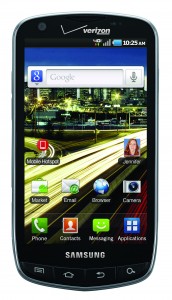
Sprint was the first carrier in the US to launch their 4G network, and the first to bring 4G to an Android device with the incredibly popular HTC EVO 4G. Sprint is the lone dog in the States using WiMAX as their method of 4G deployment even though the wireless industry has generally leaned towards LTE. Claiming peak download speeds in excess of 10Mbps with averages in the 3-6Mbps range, the network definitely has room for improvement, but a slow and steady rollout of their 4G coverage makes it one of the largest providers of 4G. Sprint offers three 4G handsets currently, but future handset plans are not clear.
HTC EVO 4G

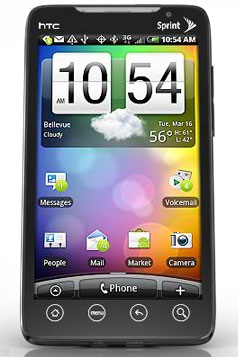
The HTC EVO 4G was the world’s first 4G Android smartphone, and has been a hot seller since it’s release at the beginning of summer 2010. Though it is aging a bit, it still holds its own against even newly released Android handsets with its 1GHz Snapdragon processor, 4.3-inch screen, and Android 2.2 software. Something has to be said for a phone that almost single handedly salvaged Sprint’s chances of competing in a crowded mobile market.
Samsung Epic 4G

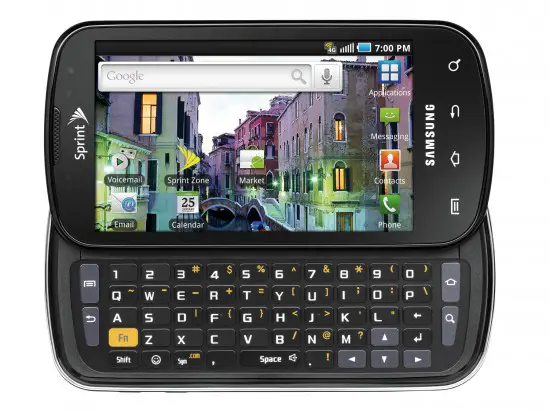
The Samsung Epic 4G was the first and only member of the original Samsung Galaxy S lineup to feature 4G support. It also was the only to feature a slide-out QWERTY keyboard, making it unique among the lineup. Featuring a powerful Hummingbird processor clocked at 1GHz and a beautiful Super AMOLED display, you can’t register much complaint about the hardware. The software, however, with its TouchWiz interface can be a bit frustrating. Oh, and the fact that it is currently stuck at Android 2.1 as Samsung delays an upgrade to Android 2.2 has been a major thorn in the sides of Epic owners.
HTC EVO Shift 4G
The HTC EVO Shift 4G is the latest addition to Sprint’s 4G family and the younger brother to the original EVO 4G. It features a scaled-back 800MHz processor and smaller screen at 3.6-inches, but gains a slide-out QWERTY keyboard. Featuring Android 2.2 and HTC Sense, this handset bears some resemblance to the T-Mobile G2 and HTC Desire Z.

T-Mobile was the second US carrier to release a handset dubbed “4G,” though many would argue their network technology doesn’t match their advertising jargon. Still, their HSPA+ network can deliver theoretical speeds that hold up to the competition. Just check out this video demonstration from CES. For now their 4G phones are capped at 21Mbps, though the second half of the year should bring devices capable of 42Mbps (keyword is capable, refer to the aforementioned CES demo to see more realistic results). Currently T-Mo only offers two 4G-capable devices with another, the Samsung Galaxy S 4G, slated for release later this month.
T-Mobile G2

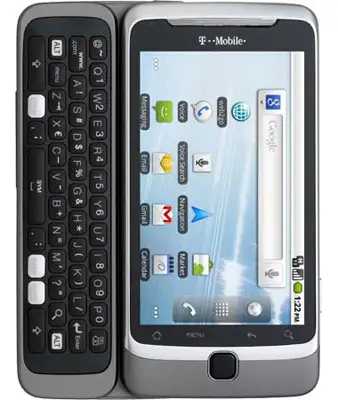
The T-Mobile G2 was the first native 4G device for the carrier and proper successor to the first ever Android handset, the T-Mobile G1. While only featuring an 800MHz processor compared to the more standard 1GHz chipset of other high-end devices, the G2 makes up for it with a stock build of Android 2.2 and slide-out QWERTY keyboard. A favorite among stock Android fans and the modding community, the G2 slid out of the limelight quickly but still remains a solid choice.
T-Mobile myTouch 4G

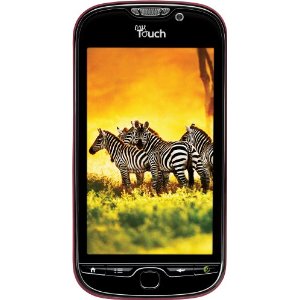
The T-Mobile myTouch 4G is the next-gen followup to the popular myTouch line of phones. Unlike the G2, the myTouch 4G does feature a 1GHz Snapdragon processor and doesn’t feature a stock build of Android 2.2. Built into the myTouch 4G’s HTC Sense UI is “Genius” buttons support for voice commands and interactions, but the real big deal on the latest myTouch is its front-facing camera. This camera uses a special version of the popular Qik video conferencing software built directly into the handsets interface, providing a seamless video chat experience over T-Mobile’s 4G network.
Samsung Galaxy S 4G

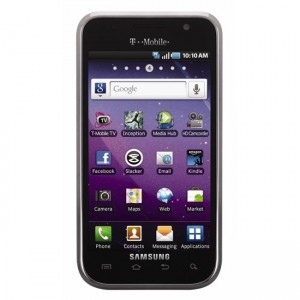
The Samsung Galaxy S 4G is an upcoming 4G handset for T-Mobile, and the second Galaxy S device in their lineup. First rumored as the Samsung Vibrant 4G, the phone borrows the internals and look of the original with a few key additions. Those additions would be the 4G radio for T-Mo’s HSPA+ network and a front-facing camera for video calling. Due out this month, it may quickly be overshadowed by the looming announcement of the Samsung Galaxy S2.

Though AT&T plans to begin rolling out their 4G LTE network towards the end of this year and into 2012, for now the company is taking a page out of T-Mobile’s book and slapping the 4G heading onto their HSPA+ network. This network should theoretically be pretty similar to T-Mobile’s in terms of speed, but they are currently quoting figures closer to Sprint with claims of downlink speeds around 6Mbps. Though all remain unreleased as of now, their upcoming lineup of 4G Android handsets could quickly change notions that AT&T is not an Android-friendly network.
HTC Inspire 4G

The HTC Inspire 4G will be AT&T’s first 4G Android handset when it launches in the coming weeks, but it probably won’t be their best. It could best be described as AT&T’s EVO 4G (or Desire HD) and features the same 1GHz Snapdragon processor and 4.3-inch display. It does get some beef in the RAM department with 768MB. It’s most enticing feature is its low launch price of $99.99 on a two-year contract, though this pricing might not be too surprising considering the phone’s rather last-generation specs. A bonus here is the phone will be among the first on AT&T to allow the installation of app from outside the Android Market.
Samsung Infuse 4G

While the specific release timeframe of the Samsung Infuse 4G is not yet known, this second Galaxy S-style phone will be AT&T’s beefed up brother to the currently available Captivate and feature a whopping 4.5-inch Super AMOLED Plus display. The processor has been notched up to a 1.2GHz Hummingbird chip, which should make the version of Android 2.2 with Samsung’s TouchWiz interface running on the Infuse feel mighty fast. The large, brilliant display is this handset’s main selling point.
Motorola Atrix 4G

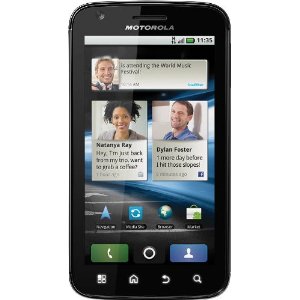
The Motorola Atrix 4G is the handset everyone is talking about, and for good reason. It will be AT&T’s first to feature a dual-core Tegra 2 chipset clocked at 1GHz per core as well as an unheard of 1GB of RAM, giving this thing computing power more like a laptop than a phone. That’s exactly why Motorola and AT&T are offering a laptop dock that will transform the smartphone into a perfectly capable netbook. The problem is, for that experience users will need to shovel out a hefty $499.99 after contract for the combo pack. The phone by itself is a more reasonable $199.99 (though the laptop dock still costs $499.99 by itself). Pricing aside, it’s hard to find a phone on this list that bests the Atrix 4G.

Verizon will technically be the last carrier to have a 4G device with the HTC Thunderbolt rumored to launch a day after AT&T’s HTC Inspire, but the carrier will be the first network to deploy LTE as their next-generation technology. We ran our own speed tests on Verizon’s new network and came up with some pretty impressive results. We got a consistent 28Mbps over LTE, an unheard of speed. The actual downlink numbers may drop once Verizon’s 4G bands get a bit more crowded, but their network currently blows all others away. An upcoming lineup of four Android 4G devices offers plenty of options.
HTC Thunderbolt

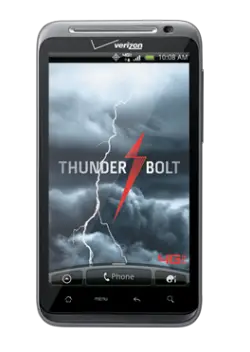
The HTC Thunderbolt will be Verizon’s first 4G device, and amounts to a pretty similar device to the Inspire 4G on AT&T (and EVO 4G on Sprint). 1GHz processor, 768MB RAM, and a 4.3-inch screen round out the Thunderbolt running Android 2.2 with HTC Sense on top. Perhaps the biggest selling point (though Verizon won’t advertise it) for the 4G LTE handset is its ability for simultaneous voice and data over 3G, a before unrealized potential of CDMA technology. But we are talking about 4G, and while this handset is perfectly capable we don’t see it as Verizon’s best.
Samsung 4G LTE Smartphone

Though an official name hasn’t been confirmed, the handset unveiled as the Samsung 4G LTE Smartphone has a lot in common with AT&T’s Infuse 4G. Despite a 4.3-inch display rather than a 4.5-inch, the handset uses the same Super AMOLED Plus technology to deliver brilliant picture quality. The device hasn’t been dubbed a Galaxy S phone, but its Android 2.2 and TouchWiz interface provide the same experience.
LG Revolution

The LG Revolution, like the Samsung 4G LTE Smartphone, still has a few secrets to reveal, but as of now doesn’t seem to carry the dual-core processor of its foreign counterpart, the LG Optimus 2X. The phone gets a 4.3-inch display and front-facing camera for Skype video chat capabilities. It is expected to launch in Q2 of this year.
Motorola Droid Bionic

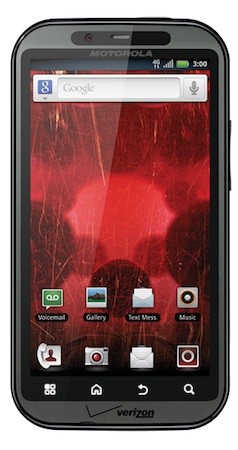
The Motorola Atrix 4G for AT&T won’t be the manufacturer’s only dual-core handset. Verizon gets their own in the form of the Motorola Droid Bionic, the only 4G handset announced to carry their iconic Droid branding. With a dual-core 1GHz Tegra 2 processor, the phone matches the Atrix 4G. In the RAM department, however, the Bionic gets only 512MB compared to the Atrix’s 1GB. The Bionic also lacks the docking capabilities of the Atrix. Despite this, it remains Verizon’s most appealing 4G option and is set for a launch later this spring.
***
So which is the best of the bunch?
It’s a close tie between the Motorola Droid Bionic on Verizon and the Atrix 4G on AT&T, but we’re going with the Atrix 4G for several reasons. Not only does its computing power best every other phone on this list, but its docking ability complete with a Linux-based desktop environment featuring Firefox web browsing is one of the most impressive moves we have seen in the mobile world as of late. It stunned us at CES, and though the pricing of the laptop dock will turn some off, we believe this may be the future of mobile computing. Unless you need a new phone right now, if you are on AT&T or planning to switch, we’d wait it out for the release of this handset over the HTC Inspire 4G and others.
Here is how we’d rank the top 4G phone by carrier:
- AT&T – Motorola Atrix 4G
- Sprint - HTC EVO 4G
- T-Mobile – Samsung Galaxy S 4G
- Verizon – Motorola Droid Bionic
Which carrier’s 4G lineup ranks number one?
Though the Atrix 4G beats out the Droid Bionic head-to-head, the top carrier spot easily goes to Verizon. Their 4G LTE network is the real deal, and their lineup of devices from four of the top smartphone manufacturers provides options that put other lineups to shame. Sure, you might not be able to grab a sub-4-inch screen if you want 4G on Verizon, but we don’t see that as a problem.If you are currently between carriers you have an interesting decision to make. Do you get the Motorola Atrix 4G at AT&T? Or do you align with Verizon on the strength of their network and upcoming handset lineup? Or maybe you choose to go with Sprint or T-Mobile, who will no doubt have some exciting things to show over the coming weeks. Unlike when the HTC EVO 4G first brought next-gen network technology to Android, you know have plenty of choices when it comes to 4G.
Source: Phandroid.com
SOLVED: Android Market Website Says “There are no android phones associated with this account.”
at
8:20 AM
Many users trying to download apps from the new Android Market Website are faced with a troubling error they can’t get past (we’ve got a solution). When they select an app to install they’re met with a message saying, “”There are no android phones associated with this account. Please sign in with a different account.”
If you’ve got the same problem (it’s affecting both rooted and non-rooted users), we’ve got step-by-step solution that should have you downloading apps and games from the market website in no time:
- Log on to http://market.android.com
- Click on My Account
- Click on Recovering Password
- Enter password (to validate it’s you)
- Under the SMS Section:
- Click Edit
- If phone number is there – remove your phone number – if number not there, go to step 6
- Save
- Sign Out
- Sign back in, go back to same page as needed – or if prompted:
- Enter and save your phone number
- Sign out
- Log on to http://market.android.com
- Click on My Market Account
- Click Settings tab – your phone should now appear!
Source: Phandroid.com
Motorola teases the real Xoom Super Bowl ad: George Orwell, flowers, iPhone-using automatons in white hoodies all involved
at
8:16 AM
We already got teased on this, but it turns out that the first teaser -- which, let's be honest, didn't have the highest production value -- was strictly a teaser. Now, Motorola's sent us a fragment of the real commercial they'll be debuting during the Super Bowl this Sunday, and it's got pretty much everything you'd expect: a handsome gentleman with flowers reading 1984 on a Xoom, white headphones, and thousands of emotionless drones "enjoying" their Apple products. The whole thing is an obvious swipe at Apple for seemingly endorsing the very homogeny it waged war against in its Ridley Scott-directed Super Bowl commercial for the Macintosh back in 1984, and we suspect you good folks are going to have some very strong opinions about it. Follow the break for the first 15 seconds of the ad.
Source: Engadget.com
Sony Ericsson Xperia Arc vs. LG Optimus 2X... fight!
at
8:14 AM
Android is our future, the stat mavens all agree, but for all its rapid growth, Google's OS still suffers from a shortage of top tier differentiation. This has in part been down to LG and Sony -- two of the world's biggest phone makers -- spending the majority of 2010 watching the battle for Android supremacy from the sidelines (the X10 disqualified itself when it announced it neither knew nor cared what Froyo was). 2011 might just be the year of redemption for both, however, as LG will soon assault the European market with a pair of truly desirable and powerful Android smartphones in the Optimus 2X and Black, while Sony Ericsson's well leaked portfolio of new Xperias includes the Arc, Neo and Play, each one of them coming with Gingerbread preloaded. We've wrapped our mitts around a pair of these high-hope devices, one from each manufacturer, and photographed the living daylights out of them sat side by side.
We humbly submit that the Xperia Arc looks and feels far more refined than LG's admittedly well designed Optimus 2X. The Arc's curvature seriously makes it feel like the thinnest phone we've ever handled and its weight is also dramatically, unreasonably minimal. Another note of import is that the 2X comes with a 4-inch screen whereas the Arc offers a more generous 4.2-inch display, yet their overall dimensions are nearly identical. All in all, we'd hardly object to having either one in our pockets, but the Arc wins it for us in terms of aesthetic appeal. Of course, the Optimus 2X has a dual-core Tegra 2 heart beating within, it's not all about looks, though in the case of this hands-on comparison, it kind of was. We'll have a full review of LG's handset in the coming days, while Sony Ericsson promises the Xperia Arc will land in Europe by the end of March. You can see more of the prototype unit we got to handle in the gallery below and there's a video comparison of the two Android newcomers after the break as well.
Dell Streak 7 phone app discovered, so far is much ado about nothing (video)
at
8:10 AM
Remember when we all laughed about making calls on the 5-inch Streak? Those were the days. Now it looks as if some clever tweakers have discovered a hidden phone app in Dell's 7-inch model... but beyond the shell of a presentation, there's not much to it. According to Streak Smart, rotation is enabled, there's a dedicated voicemail button, and calls will not seem to connect (which is, in this particular instance, seemingly unrelated to the carrier). See the frustration for yourself in the video after the break; not to worry, fans of holding giant slates up to the ear when talking to loved ones, someone somewhere will assuredly get this working at some point.
Source: Engadget.com
Samsung Smart Touch Android remote app is now available for download
at
8:08 AM
Great news, channel surfers -- Samsung's Smart Touch Android remote application is now finally available in the Android Marketplace as a free download nearly nine months after originally launching on iOS. If you dropped a hefty quantity of cheddar on a new model C Samsung Internet TV in 2010 (those with older models are out of luck) and can't wait for your Android handset to assimilate yet another life-task, today could be momentous. We say 'could' simply because our CES hands-on with the software wasn't exactly swell -- but then again, a massive trade show floor isn't exactly the best WiFi testing environment. Currently, the application has an average of four stars from 25 people, but it's not completely free from a smattering of crash and error reports. Feel free to give it a whirl if you've got the necessary gear, and if that match made in couch-potato heaven feeling doesn't come... well, don't give up hope, because that dual-sided QWERTY remote could save the day soon.
Samsung Smart Touch Android remote app hands-on
Archos 70c color e-reader now up for pre-order stateside
at
8:06 AM
What do you get when you cross the Atlantic ocean with the Archos 70b color e-reader? An alphabetical shift one place, it seems. The Android 2.1-powered book substitute with a 7-inch 800 x 480 TFT display has popped up for pre-order on JR.com. No picture (although we assume it's pretty much the same as the 70b), a $149.99 price tag, and no definitive release date. Resistive touch screen, 600MHz CPU, 4GB Storage, WiFi, SD slot, and a 10-hour untethered lifeline. Much cheaper than a Nook Color, but is still appealing amongst an even sweeter competition? That's your call.
Source: Engadget.com
Subscribe to:
Posts (Atom)